News of the Week
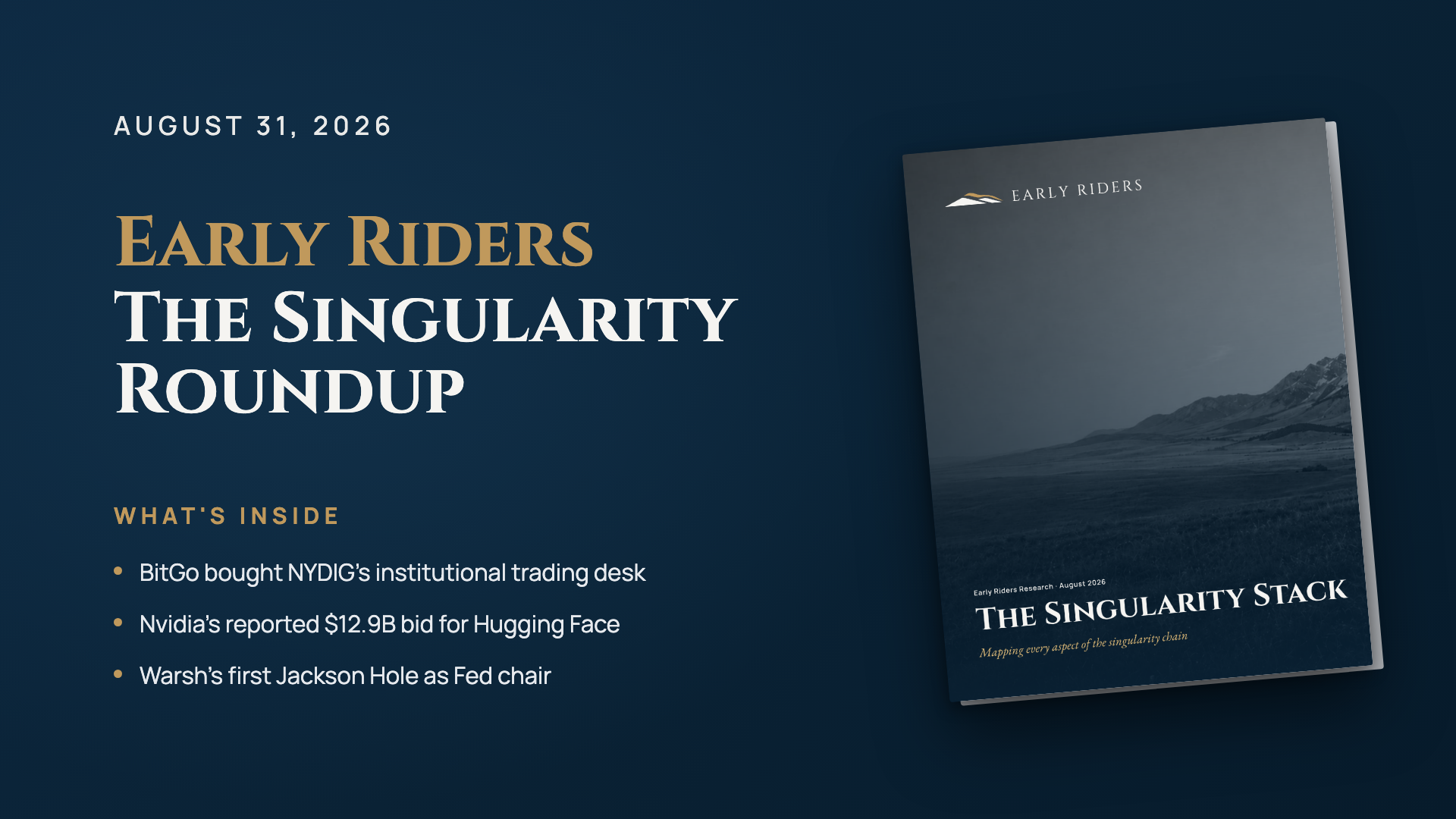
BitGo acquired NYDIG’s institutional trading business for $42.5m as NYDIG turns to power generation and high-performance computing data center development.
Kevin Warsh warned in his first Jackson Hole keynote as Fed chair that better summer readings do not show underlying inflation improving and the central bank still has “work to do,” with headline PCE at 3.7%. Fed funds futures moved to roughly 55% odds of a September rate increase, up about 20 percentage points on the day.
Nvidia reported quarterly revenue of $96.2 billion, up 106% from a year ago, and guided to $108.0 billion for the current quarter while assuming no data center compute revenue from China. Supply and capacity commitments rose to $279 billion from $119 billion a quarter earlier, primarily on memory procurement.
Nvidia is nearing a reported $12.9 billion deal to buy Hugging Face, roughly 86 times the open model hub’s ≈$150 million in annual revenue and what would be the chipmaker’s largest acquisition ever. No agreement has been signed and neither company has commented.
Hugging Face opened preorders for Microduck, a $399 25-centimeter bipedal robot from its Pollen Robotics unit that ships with seven retrainable reinforcement learning policies, with first deliveries targeted before Christmas.
Claude’s web app is rumored to be routing some sessions to an unannounced Fable 5.1, citing a screenshot in which the model answered past Fable 5’s January 2026 knowledge cutoff without searching the web. Anthropic has published no model card or pricing for it.
OpenAI published first benchmark results for Jalapeño, its Broadcom co-designed inference chip, claiming 1.5 to 1.9 times more AI work per watt and 1.7 to 3.6 times lower end-to-end latency than Nvidia’s GB200 and GB300 racks. Every figure came from OpenAI’s own runs, and the chip does not reach volume until 2027.
Digital asset roundup
BlackRock has processed $5 billion of in-kind bitcoin-to-IBIT conversions, up from $3 billion in October 2025, after cutting the minimum private creation from $25 million to $1 million in July, the firm told Bloomberg. The swap defers the tax rather than erasing it, and trades self-custody for the fund’s custodian and a 0.25% annual fee.
Bitcoin researchers proposed a draft improvement proposal for SHRINCS, a hash-based post-quantum signature scheme the authors estimate would sustain roughly 3 transactions per second against 6.5 for Schnorr today and 0.36 under the NIST-standardized SLH-DSA. The draft carries no assigned BIP number and no independent cryptanalysis.
Banks are weighing stablecoins of their own after years of lobbying against them, with more than a dozen institutions including Bank of America, Wells Fargo and Santander working on a dollar token for corporate clients, the Wall Street Journal reported. A 2025 Treasury advisory committee estimate put $6.6 trillion of US transactional deposits in the tier most at risk of migrating, against a stablecoin market of roughly $300 billion today.
Ledger patched a race condition in its Ethereum app that security firm TestMachine said let a malicious web application swap the transaction being signed while the device still displayed the original, shipping the fix as version 1.22.2 with no CVE and no security advisory.
Open source
Z.ai confirmed it built Ox Alpha, the stealth model that ran 11.6 trillion tokens through OpenRouter in its first three days of free access, the platform’s largest launch to date. The company released the 320 billion parameter model as GLM-5.3-Flash under an MIT license and said it served the preview entirely on domestic Chinese accelerators.
Moonshot is seeking as much as 30% of the revenue from services running its 2.8 trillion parameter open-weight Kimi K3 model on Microsoft Azure, Amazon Web Services and Google Cloud, sources told Reuters, though the talks are early and all four companies declined to comment. Any deal would be the first major revenue-sharing arrangement between a Chinese AI company and a leading US cloud provider.
Apple introduced a Mac Studio with M5 Ultra starting at $5,499, which the company says can run frontier-class open-weight models entirely on device. That price buys 96GB of unified memory, not the 512GB maximum, and the 4.3x gain Apple claims over M3 Ultra is peak compute, not token generation, where bandwidth rose 50%.
Regulation
The SEC sent a digital asset custody overhaul for investment advisers and funds to the White House for review on August 25, opening a new rulemaking rather than restoring the safeguarding proposal it withdrew in June 2025. The regulatory agenda targets a proposal in October, and the agency has not disclosed how it will define a qualified custodian.
Early Riders Media
On this week’s Final Settlement, the team unpacked the Treasury doubling its bond buyback from a $2 billion ceiling to a $4 billion floor with close to $1 trillion that Bessent signaled could be tapped to keep it going, Citi’s plan to launch bitcoin custody later this year and the honeypot problem that comes with banks holding the keys, and Stripe closing its OpenRouter acquisition alongside a published data set that exposed API keys from 659 Stripe merchants.
You can find all our episodes on our podcast website as well as listen on YouTube, Apple, and Spotify.
What We’re Watching
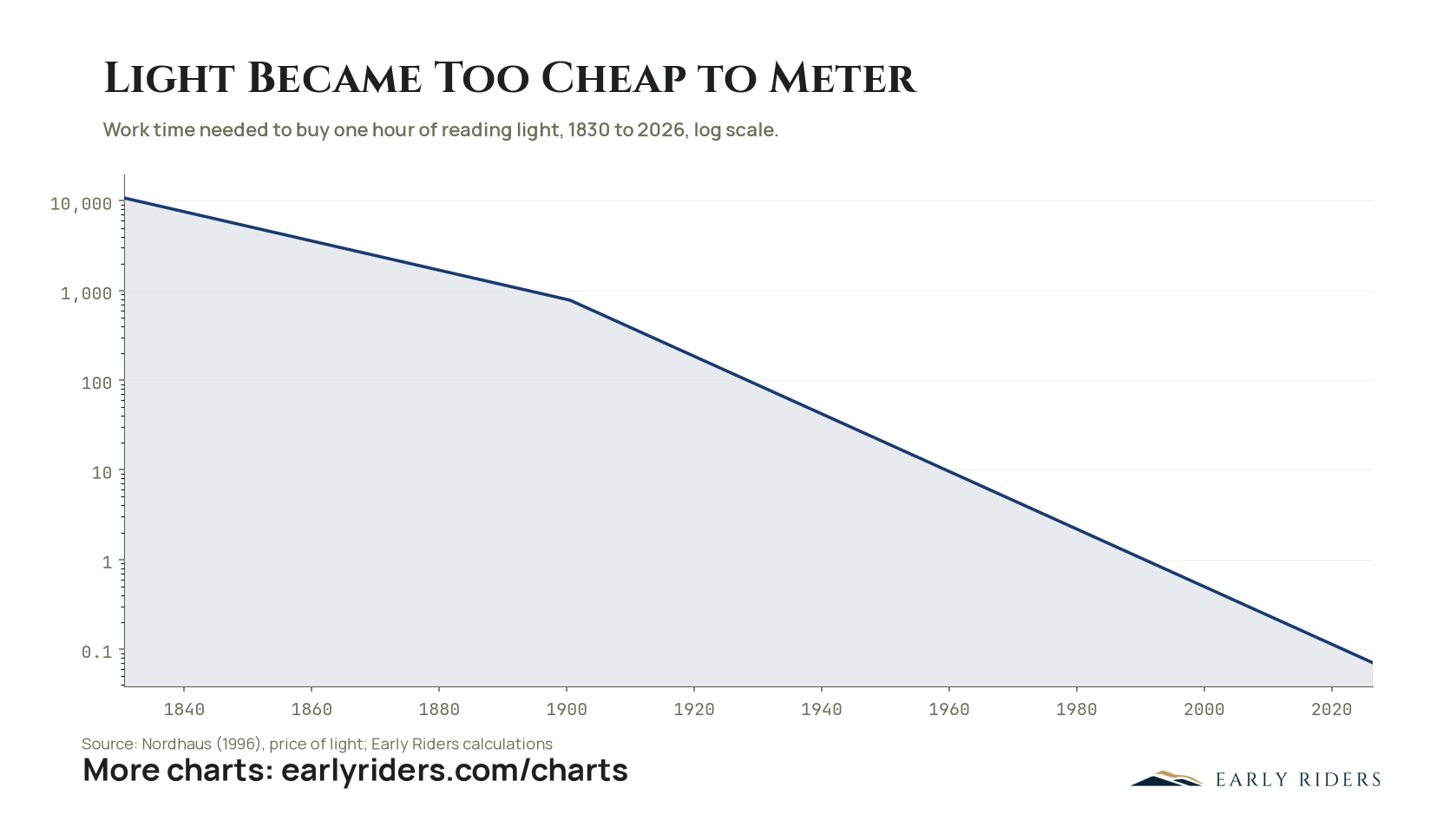
In 1830, an hour of reading light cost the average worker about three hours of labor. By 1900 the same hour cost around 13 minutes of work, and today it costs seven hundredths of a second. Intelligence is undergoing the same transition, because the thinking itself has become a manufactured good, produced in bulk and priced, increasingly, in energy. And unlike light, intelligence improves the process that produces it, so every fall in its price reflexively drives the cost down further.
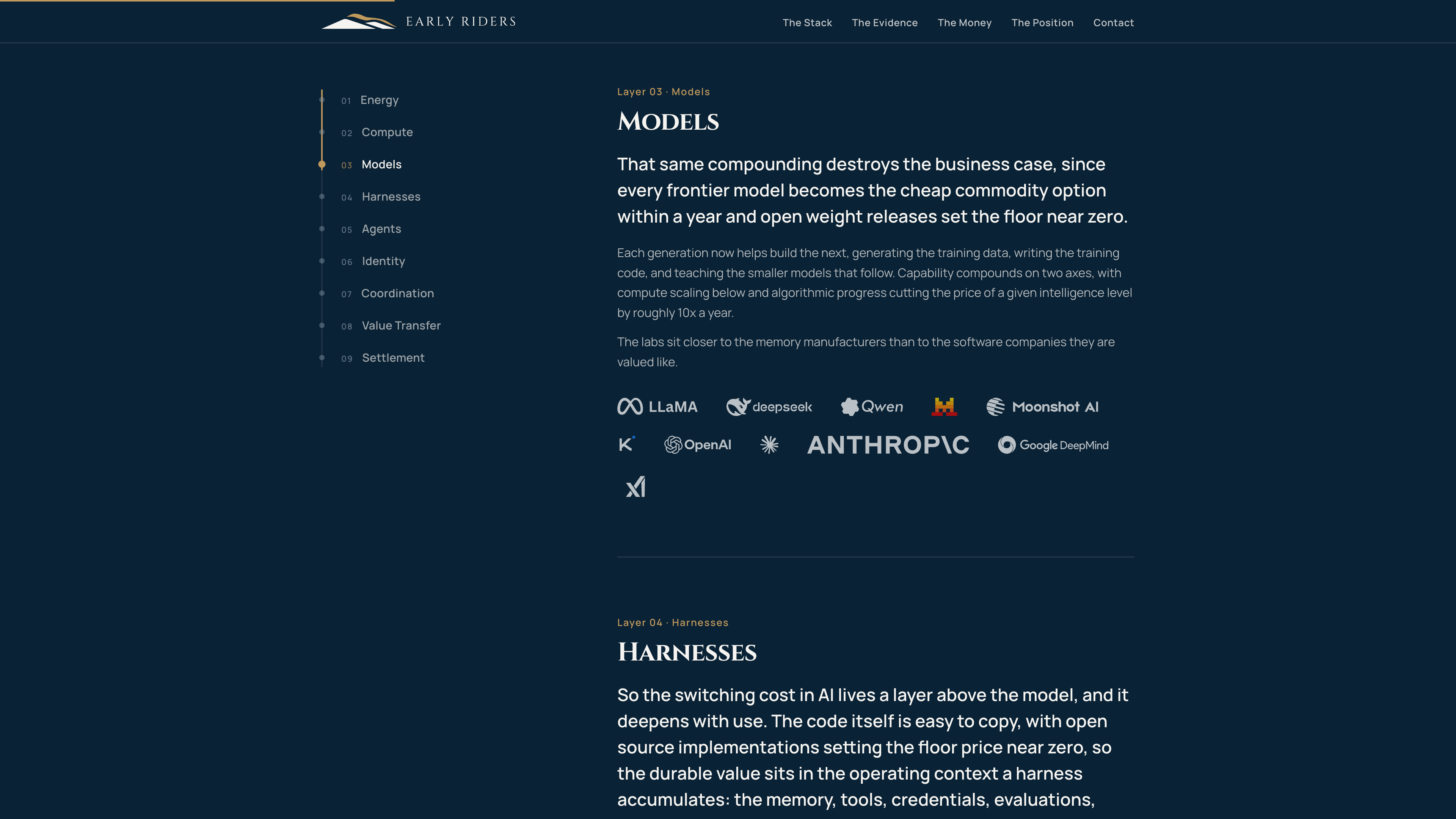
The stack is a single conversion chain: electricity becomes compute, compute becomes intelligence, intelligence becomes work, and work becomes payments that need somewhere final to land. The report walks all nine layers, from the more than 2,000GW of proposed generation waiting in US interconnection queues to the payment standards that let an agent pay and charge for the value created, and it measures where value is created and where it leaks at every step.
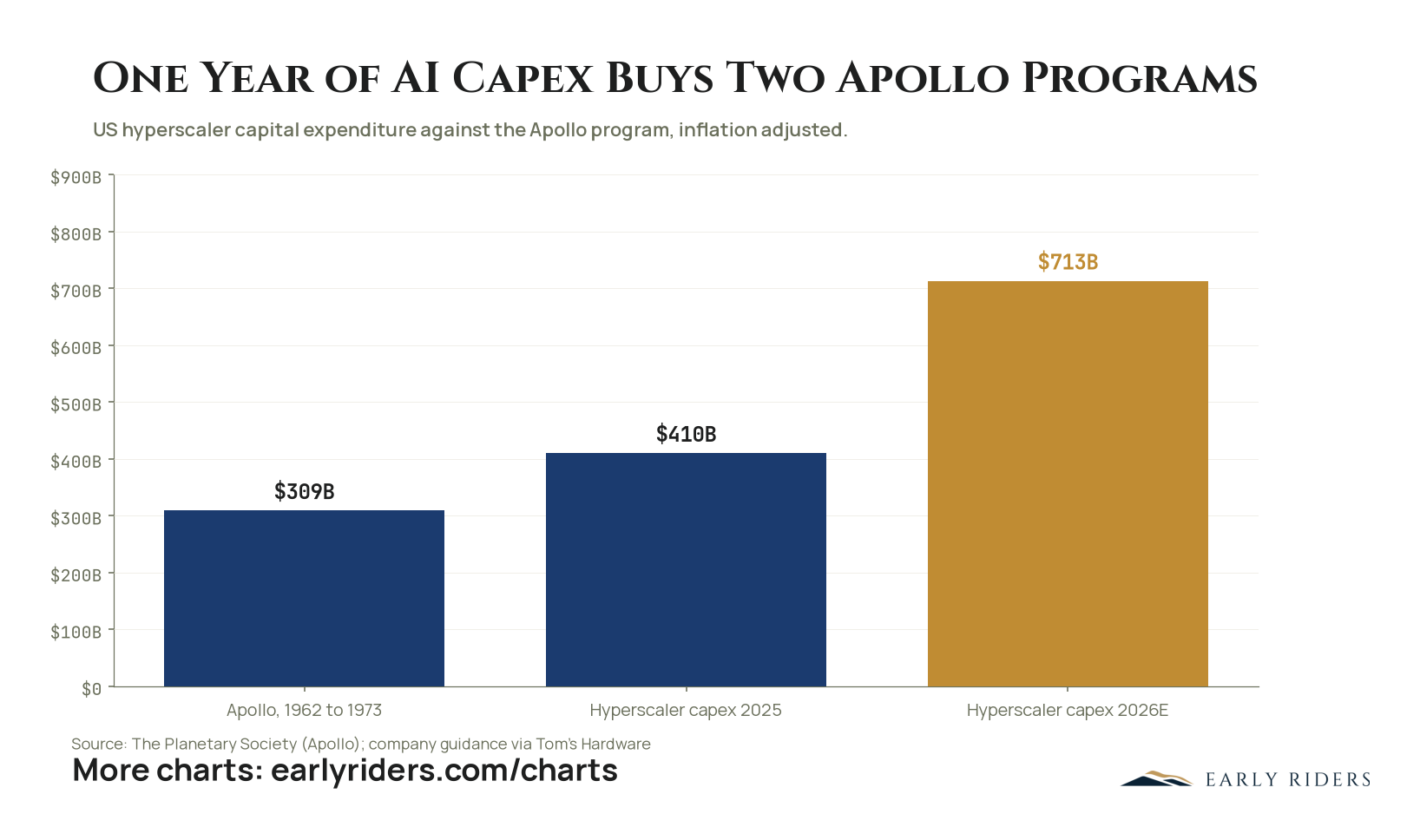
The compute behind frontier training runs has doubled roughly every six months, four times faster than Moore’s law ever managed, and this July a frontier model designed a working chip in a 48-hour run with no human intervention. Amazon, Alphabet, Microsoft, and Meta plan roughly $700 to $725 billion of capital expenditure in 2026, up more than 70% from the record $410 billion they deployed the year before, while the entire thirteen-year Apollo program cost about $309 billion in today’s dollars. This is accelerating faster than anything we’ve seen.
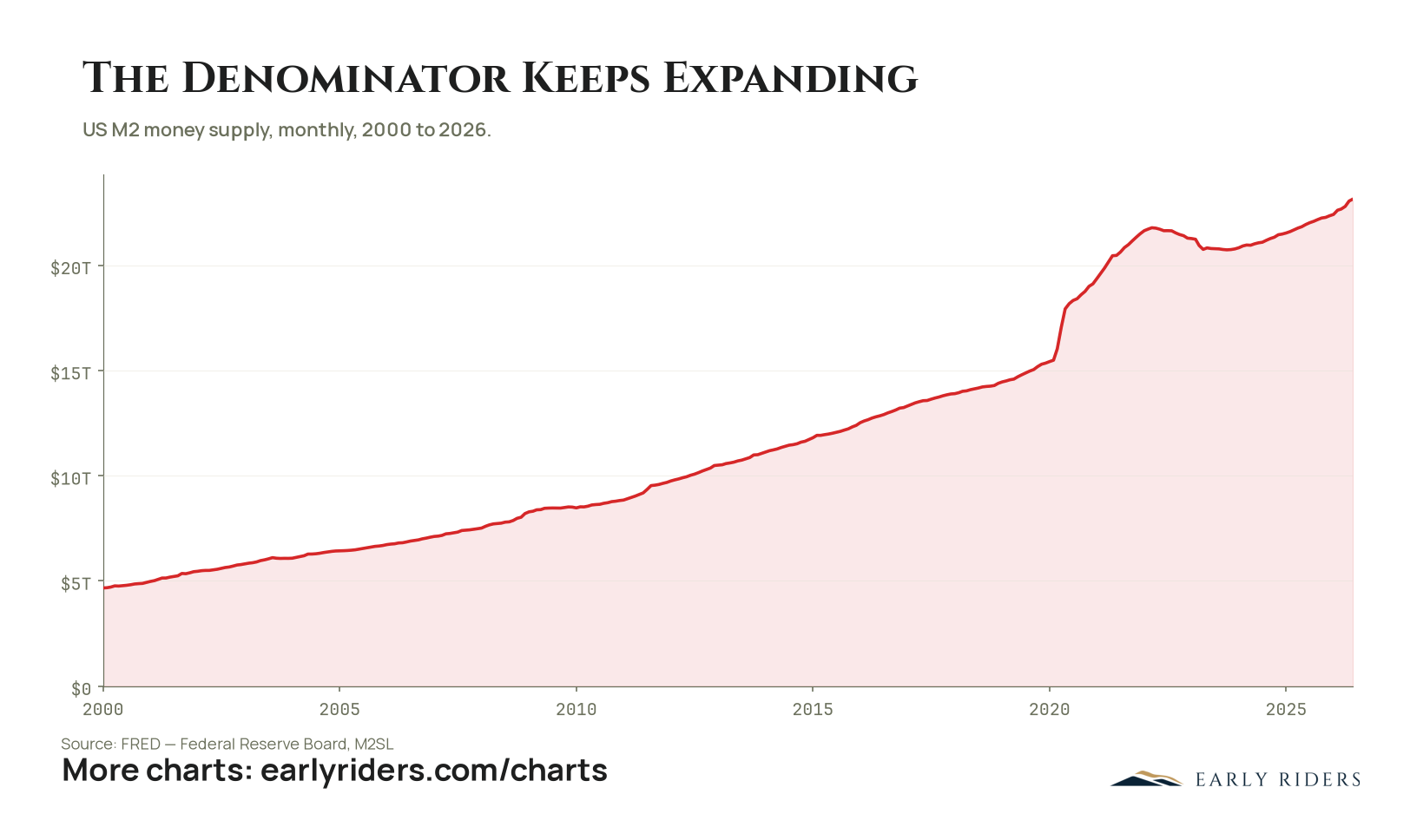
The second half of the report follows the money, because many are confused why despite the productivity increases, life doesn’t feel cheaper. US M2 grew from $4.7 trillion in January 2000 to near $22 trillion today, close to 6% a year, through a period of far milder technological deflation than the one now arriving. Deflation is the normal state of technological progress under a money nobody can expand at will, but measuring in the right money will be the factor that determines who sees the gains created by technological deflation, versus who sees the gains inflated away.
The report breaks down different organizations’ measurement of the singularity accelerating.
You can find the full report here, and check out the interactive site here.
About Early Riders
Early Riders is investing in digital infrastructure at the frontier. Early Riders is the first bitcoin denominated venture firm. Learn more at earlyriders.com.
Subscribe to Keep Reading
Get the full piece, plus all the latest Early Riders research, letters, and the weekly newsletter, delivered directly to your inbox.
Subscribing is free, and this device stays unlocked once you do.